
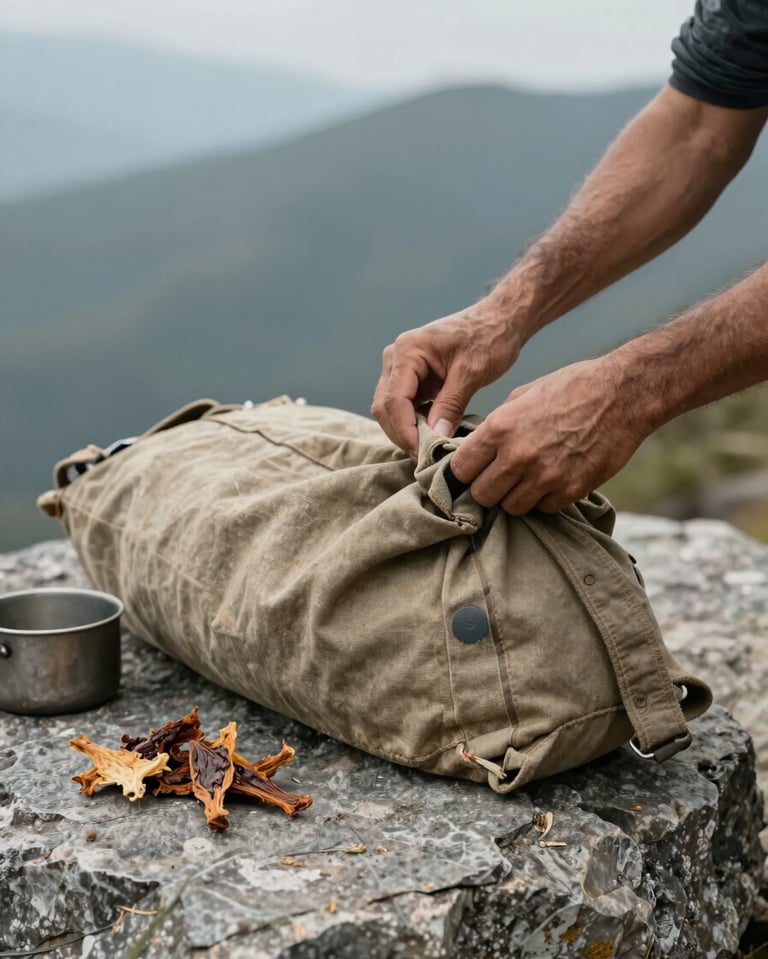
What you carry, and why it matters
Food on a single-day hiking tour and a multi-day trek is determined by several factors, including the terrain and the group's physical needs to maintain energy and performance.
For single-day hikes, lighter, more portable options are often preferred, allowing for quick meals that fit within the day’s activities.
In contrast, for multi-day treks, it's crucial to plan meals that suit the length of the journey and provide sufficient nutrients to keep the group energised and moving efficiently across various terrains. Ideally, meals should be easy to prepare and pack, ensuring that the culinary aspects do not complicate the experience in the great outdoors.
Sourced where the route allows
Kula Damjanova Hiking knows the region's resupply points, which villages have reliable provisions, and which stretches require carrying everything from the trailhead. That knowledge is part of the planning.
Dietary requirements are discussed before departure, not managed on day two when options are limited. If something needs adjusting, it gets adjusted before the pack is loaded.